From Multiomics to Clinical Intelligence: Volv Global at Frontiers Health 2026
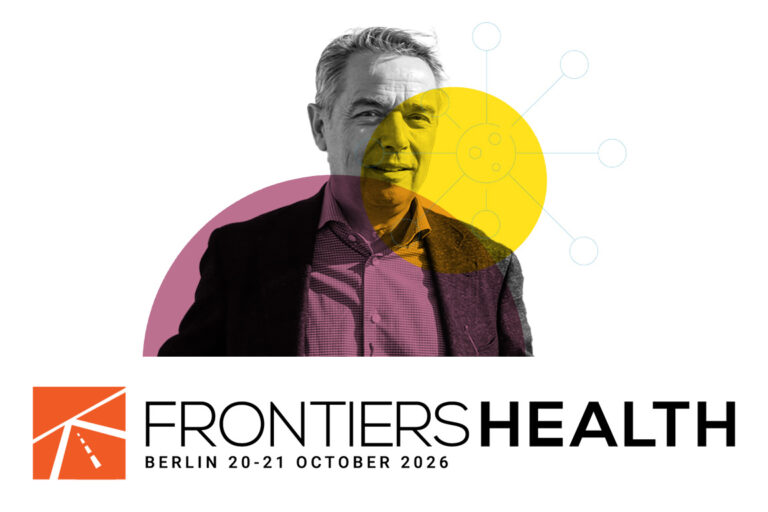
Volv Global at Frontiers Health's panel on AI & biomarker science translating complex biological signals into cli...
Volv Global generates new insight into difficult-to-diagnose diseases, powered by proprietary machine learning and real-world data.
Our proprietary machine learning methodologies serve pharmaceutical companies, reducing costs across the healthcare ecosystem and improving outcomes for people living with disease.
Volv Global's research shows how patients move through diagnosis, treatment and care, and where the pathway fails them.
Volv Global's methodology characterises and segments patient populations, giving healthcare organisations and patients clearer pathways, and pharmaceutical teams more efficient development and commercialisation.
Volv Global generates new understanding of patient biomarkers, phenotypes, clinical features and endpoints, helping clinicians see how a disease presents.
Late and incorrect diagnosis carries an avoidable cost across the system, from unnecessary testing to delayed care. Volv Global's research quantifies that burden, giving pharma and payers the evidence to act on it.
Volv Global helps you work smarter
Volv Global uses AI and real-world data to generate knowledge about difficult-to-diagnose diseases.
Clients use these insights to strengthen clinical development strategy, deepen disease understanding, and find opportunities to develop diagnostic tools faster.
The same insights support repositioning existing drugs to extend their R&D viability, helping clients reach new markets and work smarter.
Volv Global, in numbers
Volv Global delivers high-value solutions at speed
De-risk clinical strategy, strengthening trial planning around a clearer patient picture.
Generate real-world evidence, supporting pricing and reimbursement decisions.
Expand medical understanding with new real-world data insight into disease progression and outcomes.
Support a strong launch and extend the product lifecycle by finding more patients sooner.
Driving innovation in rare disease & healthcare AI
At Volv Global, we combine advanced AI in healthcare with real-world data (RWD) to deliver transformative solutions for rare and difficult-to-diagnose disease patients. Our proprietary methodology for machine learning in healthcare technology enables:
By partnering with Volv Global, pharmaceutical innovators, healthcare providers, and policymakers gain the evidence to make smarter, faster decisions.
New knowledge, at speed
Introducing inTrigue
With inTrigue, our flagship machine learning methodology, Volv Global studies difficult-to-diagnose disease at population scale, showing where patients are missed and why.
Understanding patient phenomenology, across all diseases.
Researching the early biomarker patterns that precede a condition, sometimes years before conventional signs appear.
Growing the real-world evidence on a disease, and a clearer view of how many people it affects.
Modelling how disease progresses across diagnosed populations, using real-world evidence.
Sizing the diagnosed population not yet on treatment, and showing where the gap to care opens.
The human story
Volv Global gives pharmaceutical innovators insight into difficult-to-diagnose diseases, so they can develop effective technology and treatments.
For the patient, this can mean an earlier diagnosis, a life-changing drug, or the chance to connect with a wider community for education and support while living with a rare disease.
Every individual matters
Stay informed
Volv Global at Frontiers Health's panel on AI & biomarker science translating complex biological signals into cli...
Volv Global CEO Christopher Rudolf will speak at the DREAMS Neuromuscular Disease AI Webinar
Volv Global at the 25th Annual NEALS Meeting, presenting new research on early identification of ALS using advanced M...
Presenting new research on whether a machine learning model can flag which patients with CAP are most likely to progr...
The next useful thing AI does in solid tumour care is about timing, not detection. The patient must reach the right t...
Results for the model flagging early ARDS risk in pneumonia will be presented at ERS Congress 2026.

Volv Global joins Innovaud, One Nucleus & ARC West London to explore innovation and investment opportunities acro...
Volv Global at ERS Congress 2026, presenting new research in collaboration with CSL Behring: Can We Catch ARDS Before...
AI Innovation in Real-World Evidence & Data Analytics Volv Global has been selected as a finalist in the 2026 Fie...
Volv Global applied machine learning to 24M UK primary care records, surfacing ~1,200 undiagnosed GEP-NET patients, 5...
ASCO 2026 produced landmark oncology data. The question no one asked from the podium: can clinical infrastructure get...
Drive For Change white paper: three paradigm shifts to unlock orphan drug development
Go deeper
Volv Global at Frontiers Health's panel on AI & biomarker science translating complex biological signals into cli...
Volv Global CEO Christopher Rudolf will speak at the DREAMS Neuromuscular Disease AI Webinar
Volv Global at the 25th Annual NEALS Meeting, presenting new research on early identification of ALS using advanced M...
Presenting new research on whether a machine learning model can flag which patients with CAP are most likely to progr...
The next useful thing AI does in solid tumour care is about timing, not detection. The patient must reach the right t...
Results for the model flagging early ARDS risk in pneumonia will be presented at ERS Congress 2026.
Volv Global at ERS Congress 2026, presenting new research in collaboration with CSL Behring: Can We Catch ARDS Before...
Volv Global applied machine learning to 24M UK primary care records, surfacing ~1,200 undiagnosed GEP-NET patients, 5...
GEP-NETs are among the most diagnostically elusive tumours in oncology. This case study shows how machine learning ap...

Approximately 95% of rare diseases have no approved treatment. Drive For Change identifies three structural paradigms...
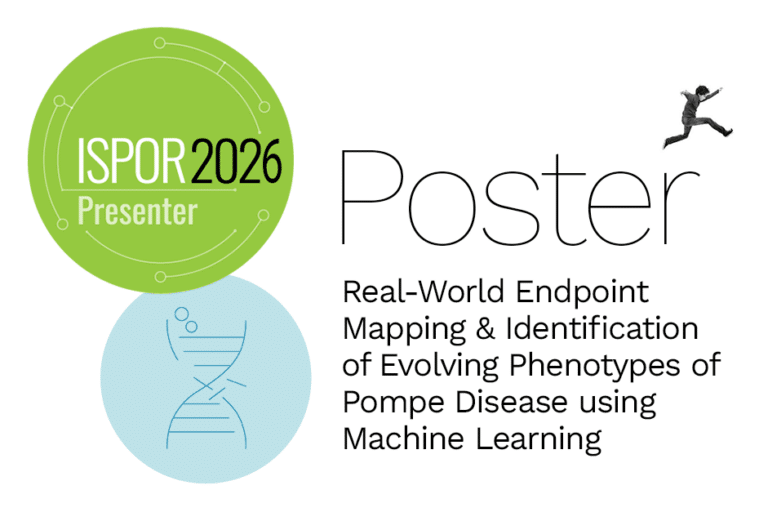
Machine learning applied to 3,549 confirmed Pompe disease patients – the largest machine learning study of the diseas...
New research demonstrates that machine learning can map clinician-defined endpoints to real-world claims data in Pomp...